


Also known as: Birmingham Metro Authority
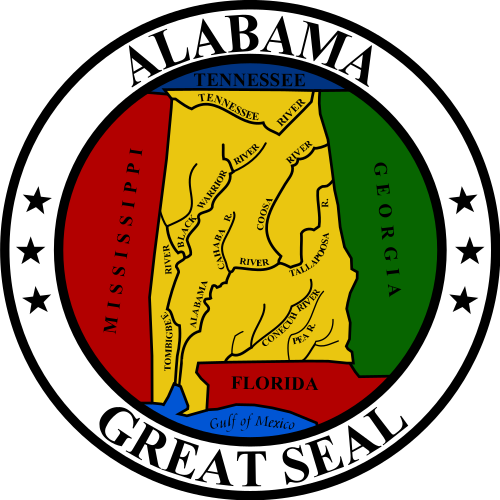
Birmingham is a lower-income small city of 198,173 with home prices 1.3× below the Alabama median.
Birmingham sits in Jefferson County with a population of 198,173, which makes it the largest city in Alabama by a margin that tends to surprise people who haven't looked at the numbers recently. It is, in the way of many mid-sized American cities, a place that contains more complexity than its reputation fully captures.
Demographics and Age Profile
According to Census ACS 5-Year 2024 data, Birmingham's median age is 35.6 years. Children under 18 account for 18.9 percent of the population, some 37,436 residents, which the data characterizes as a family-oriented age profile. The 18-to-34 cohort numbers 59,997 people, a figure that reflects the city's substantial university presence.
The racial composition, per Census ACS 5-Year 2023, shows a total of 133,817 Black residents and 50,931 white residents, with 2,836 Asian residents and 9,709 Hispanic or Latino residents. Total households number 88,527, of which 42,060 are family households.
Housing Affordability
The price-to-income ratio in Birmingham stands at 3.4, and rent consumes approximately 28.8 percent of median income, according to calculations derived from Census median income and home value data. Both figures place Birmingham in the "affordable" category by conventional housing-cost benchmarks — a price-to-income ratio below 4.0 is generally considered the threshold for affordability, and a rent burden below 30 percent of income is the standard federal reference point. For a city of its size and regional significance, this is a notable characteristic.
Air Quality
The EPA AQI Annual Summary for 2024 recorded 366 days of air quality monitoring in Birmingham. Of those, 95 were classified as "good" days and 265 as "moderate." Six days fell into the "unhealthy for sensitive groups" category. No days were recorded as unhealthy for the general population, very unhealthy, or hazardous. The maximum AQI recorded was 119. The monitoring station is identified as Birmingham AP, located approximately 3.9 miles from the city center, per NOAA ACIS data.
Climate
Birmingham's average temperature is 65.4 degrees Fahrenheit, and the city receives 59.0 inches of annual precipitation, according to NOAA ACIS records from the Birmingham AP station. That precipitation figure is notably higher than the national average, a fact that tends to register with newcomers during their first spring.
Broadband Access
Per FCC Broadband Data Collection figures as of June 2025, Birmingham achieves 100 percent coverage at the 25/3 Mbps threshold, 100 percent at 100/20 Mbps, and 100 percent at 250/25 Mbps across its 128,164 total units. Coverage at the 1,000/100 Mbps tier reaches approximately 36.6 percent of units. Full gigabit availability, in other words, remains a work in progress, though baseline broadband access is effectively universal.
Education
The Census ACS data places eight colleges and universities within Birmingham, per NCES IPEDS 2022 records matched to the city. The University of Alabama at Birmingham is the most prominent among them. According to College Scorecard data, UAB reports an average SAT score of 1,258, an admission rate of 88.18 percent, in-state tuition of $9,098, out-of-state tuition of $22,562, and an enrollment of 11,635. The completion rate is listed at a figure available in the scorecard data. The relatively open admission rate and comparatively modest in-state tuition make UAB a significant regional access institution.
Childcare
Birmingham has 140 licensed childcare centers, according to state facility data. These range from small neighborhood operations to larger multi-site providers. The presence of 140 facilities in a city of roughly 198,000 residents suggests a reasonably dense childcare infrastructure, though proximity and cost vary considerably across neighborhoods.
Civic and Community Organizations
The IRS Exempt Organizations Business Master File identifies 327 churches operating in Birmingham, along with 22 arts organizations — among them Opera Birmingham, Alabama Ballet Endowment Inc., and the Metropolitan Youth Orchestras of Central Alabama. Thirty-three civic service organizations are also on record, including a Boy Scouts of America council and Civitan International, whose national headquarters is located in Birmingham. Four animal welfare organizations operate in the city, including the Greater Birmingham Humane Society.
The chamber of commerce on record is the Center Point Chamber of Commerce, per the IRS EO BMF matched via canonical registry.
Financial Services
FDIC branch data shows multiple banking institutions operating in Birmingham, including Bryant Bank branches at locations such as 5319 Highway 280 and 2700 Cahaba Village. The broader branch network reflects the city's role as a regional financial center, a legacy of its historical position in Alabama's commercial economy.
Municipal Governance and Zoning
Birmingham's municipal code is maintained and accessible through Municode at https://library.municode.com/al/birmingham. Alabama municipalities derive their zoning authority from Code of Alabama § 11-52-70 et seq., which grants cities the power to regulate land use for purposes including, as the statutory language describes, "promoting the health, safety, convenience, order, prosperity, or the general welfare of the residents" — a formulation that has appeared in Alabama municipal ordinances since at least 1998, when Atmore's zoning ordinance, a representative example from the Municode corpus, adopted nearly identical language. Planning commissions in Alabama municipalities hold public hearings, adopt subdivision regulations pursuant to § 11-52-31, and make recommendations to city councils on zoning amendments, per § 11-52-32.
Separately, Ala. Code § 2-15-48 makes clear that state permit fees for certain business activities are cumulative with any municipal license requirements, and that nothing in the state article prohibits a city from adopting its own sanitary rules or regulations for businesses operating within its limits. This layering of state and local authority is a recurring feature of Alabama regulatory structure.
Arts and Cultural Infrastructure
The 22 arts organizations identified through IRS records include the Birmingham Music Cooperative, the Cooperative Exchange, and Charles Town-related entities, among others. Opera Birmingham and the Alabama Ballet Endowment represent the city's longer-standing performing arts institutions. The Metropolitan Youth Orchestras of Central Alabama suggests an active pipeline of music education alongside professional performance.
The attractions data, drawn from OpenStreetMap's Overpass query of theme parks, zoos, aquariums, and museums within 25 miles, returned no results — a finding that likely reflects the particular categories queried rather than the actual cultural landscape, given the presence of institutions like the Birmingham Civil Rights Institute and the Birmingham Museum of Art, which fall outside those specific OSM tags.
Further Reading
- U.S. Census Bureau, American Community Survey 5-Year Estimates — https://data.census.gov
- National Center for Education Statistics, Common Core of Data 2022 — https://nces.ed.gov/ccd/
- City of Birmingham, Municipal Code (Municode) — https://library.municode.com/al/birmingham